
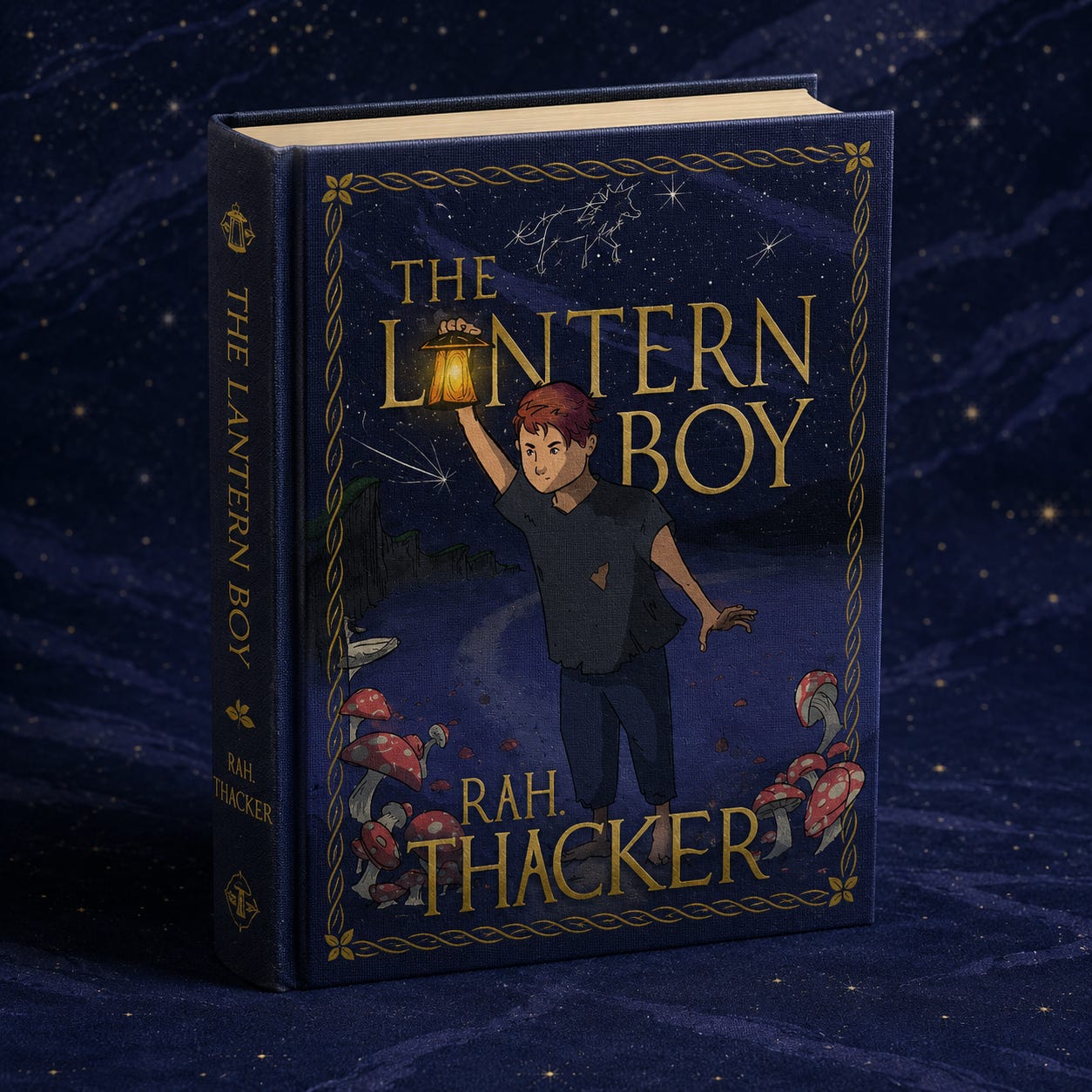
I am a twice-published author this month! First: my book, The Lantern Boy, is available as of TODAY in eBook and Audible as an audio. Wowie! It’s good to have this project complete. Catch it here (P.S. Audible is running a sale right now…).
Second: my first short story has been published in Whim & Wander: the Journal! It was a true delight to be featured there. Read Where the Colors Lie.
And now, 19 ways writing a novel changed me (with a preamble).
The Preamble
Daydreaming, I think, is a gift. It’s an endless spring of entertainment and invention for the bored. And it’s increasingly rare in the era of screens and instant answers.
In November 2015, I was engaged in this endangered activity. I sat in the backseat of my family’s car (waiting to go to a church-adjacent function) when a fateful image struck my mind: a boy with a light (perhaps a fairy? – anyway, it seemed alive) in his hand. And more than an image, it was a feeling. The image and the feeling were inseparable. This boy was on a journey – and the light was hope, faith, and courage to see it to the end.
That was the beginning. Over the proceeding decade, I wrote the image into life. It became a 51,000 word novel. I rewrote it entirely 4 times across 12 drafts.
Full disclaimer: I am incorrigibly biased toward it. It is as much Me as anything could be – in particular, 2015—2026 me. It is the very best I have to offer from these years of transformation into manhood. It also embodies my growth as a writer. I’m genuinely proud of this, and I would love to share The Lantern Boy with you.
But as I was saying, here are Some Things I Learned
1. The story you set out to write and the one you actually finish may look entirely different. That’s okay. Creating is play. It’s building with Legos. The house gets knocked down. Oops. All good. Laugh and use the same bricks to build it back up in a new way that gives new delight.
2. Early readers will crush your soul. Thank them anyway. (My editor gave a review that appeared so scathing on first read that I physiologically felt as though I’d just been slapped in the head. Upon later reading, he was actually gracious with his words. It still hurt. But the story is much better for it.)
3. Pay attention to that niggling that tells you something might not be working in a sentence, a paragraph, or a scene. You are too familiar with your story to be objective, but this sixth sense is doing what it can to help. If you wonder whether a scene is working, it isn’t. Editing is about extinguishing vague doubts.
4. Sharing a long-nursed work is the highest of highs.
5. The first half of a book is about throwing fun things at the reader. Don’t try to have too many payoffs. The second half is about making those diversities harmonize into a sting. Don’t introduce too many new concepts.
6. If a scene isn’t working, try writing it from a different character’s perspective. Then probably throw that away. But it will help you see the same information in a new way.
7. If you are unsure what should happen in a scene, identify exactly what each character is being driven by – then, heap on conflict.
8. Outlines save time. They must be held loosely.
9. Writing a novel is an endurance sport.
10. Writing a novel is an act of faith.
11. Writing a novel tests your fidelity.
12. Writing a novel is painful.
13. Writing a novel is worth it.
14. Develop a rhythm and stick to it.
15. Be selective in the media you consume. What you read is what you’ll write.
16. One faithful supporter who is clamoring for the end product makes all the difference.
17. A creative project never announces that it is complete. You decide.
18. Above all, finish something. Finish it and call it good. Tell the world about it and then go make the next thing with all your increasing wisdom and deftness.
19. Art ministers to the artist. I could never have imagined that The Lantern Boy, which I wrote for my younger self (because I never could get enough books with heroes escaping evil marshes and talking animal sidekicks and classic narrators), well, that book turned out to be precisely what I needed a decade later. It has made me laugh, and cry, and given my own life a sense of story that I never could’ve expected. But that’s what a story is supposed to do, right? Whirl us away to someplace foreign, let us delve for a meaning we haven’t known yet, and then return us right back to our comfy couch – now with an understanding of the richness of our own lives.
For these reasons, and more, I have learned that the finishing touch of the artist is found in three celebratory words. It’s a declaration of gratitude. Every creator ought to say at the end of his work… “it is good.”
The Postamble
Alright, last thing to share today. Here’s a trailer with an excerpt from my book!
Please do check out The Lantern Boy. You can hear a longer sample on Audible. My prayer for years has been that this book may bring some joy and hope and courage to your life, as it has to mine.
Congratulations!!! What a well-deserved accomplishment, and how satisfying it must be to finally see it in print—that feeling never gets old.
I can’t wait to read it!
Loving hearing The Lantern Boy in your voice. ♥️